Overview
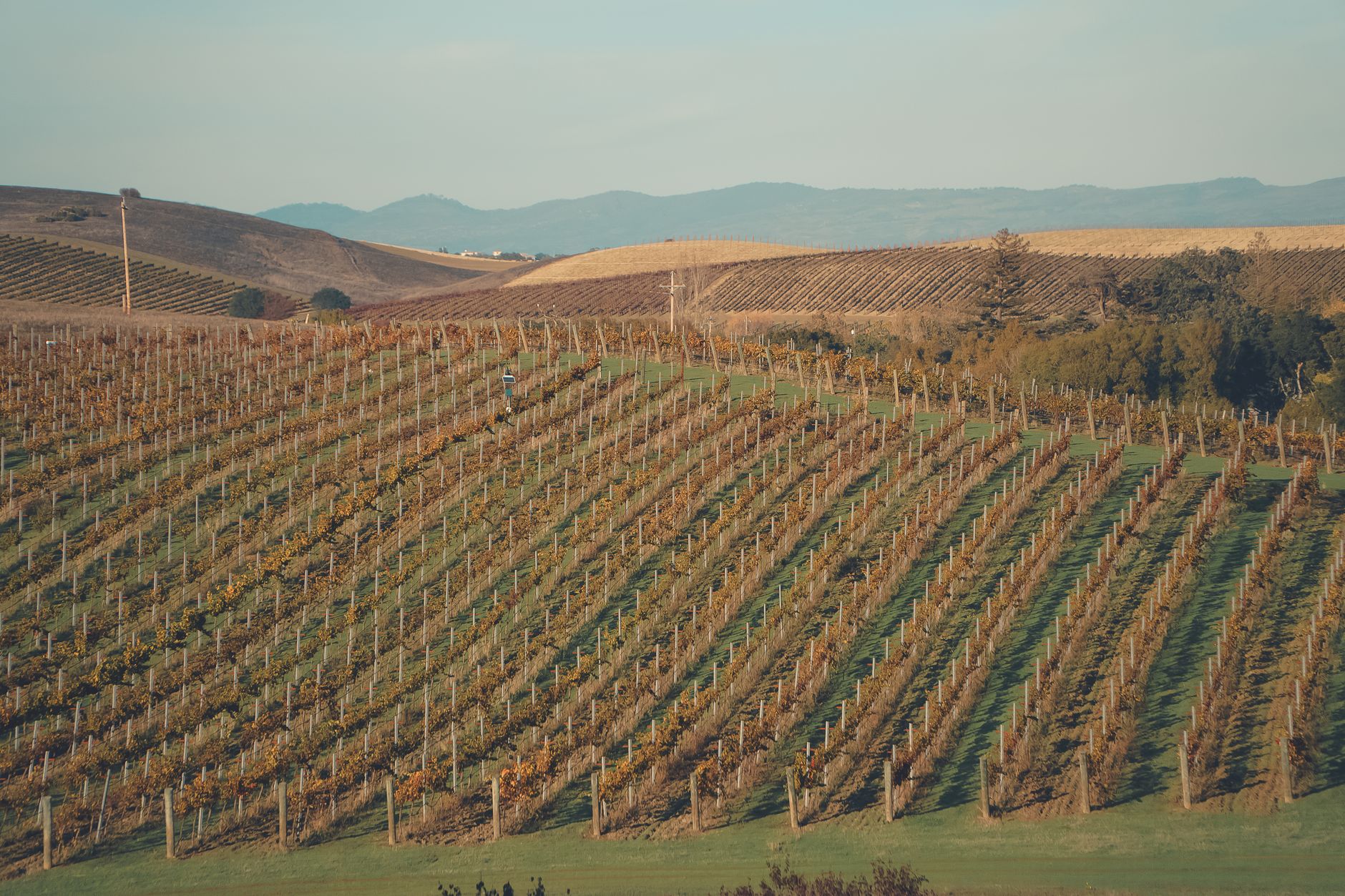
California is the most visible American wine region internationally and one of the most important wine-producing places in the world. Its rise was not inevitable. It depended on climate, land, migration, capital, scientific research, Prohibition recovery, marketing, tourism, and the development of recognizable regional identities such as Napa Valley, Sonoma County, Paso Robles, Santa Barbara County, and many others.
A Level 1 article should present California as a major wine region, not as the whole story of American wine. Oregon, Washington, New York, Virginia, Texas, Michigan, and other states also matter. California's role is central because of scale, visibility, and export reputation.
Early foundations
California's wine history begins before statehood, with mission vineyards and later waves of commercial planting. Immigrant communities brought grape-growing and winemaking knowledge from Europe. By the late nineteenth century, California had an expanding wine industry, but it also faced phylloxera, economic instability, and changing markets.
Prohibition interrupted that development. Some vineyards survived by producing grapes for home winemaking or other legal uses; others were abandoned or replanted. After repeal, California wine had to rebuild both supply and reputation.
Science, universities, and modernization
California's rise was closely tied to technical improvement. University research, extension work, better cellar hygiene, temperature control, clonal selection, rootstock knowledge, and vineyard site matching all contributed. Modern California wine was not just a story of sunny vineyards; it was a story of applying science to farming and cellar practice.
This matters because California helped popularize varietal labeling in the United States. Instead of focusing mainly on European place names, many American bottles emphasized grape names such as Cabernet Sauvignon, Chardonnay, Merlot, Pinot Noir, Zinfandel, and Sauvignon Blanc. That approach helped consumers learn wine through varieties.
Napa, Sonoma, and regional identity
Napa Valley became the most famous California fine-wine name, especially for Cabernet Sauvignon and related Bordeaux varieties. Sonoma County developed a broader regional identity, with coastal, valley, and mountain influences supporting Pinot Noir, Chardonnay, Zinfandel, Cabernet Sauvignon, and other grapes. Other California regions developed their own identities around climate, soil, elevation, and grape choice.
The American Viticultural Area system helped formalize many of these names. An AVA identifies a grape-growing area with distinguishing geographic features, but it does not impose the same style rules as many European appellations. That distinction is essential for readers.
The Judgment of Paris and global attention
The 1976 Judgment of Paris is often used as a symbolic turning point because California wines performed strongly in a blind tasting against French benchmarks. The event did not single-handedly create California quality, but it gave international attention to a quality movement already underway. It remains useful as a cultural marker, though it should not be exaggerated into a simple "California beat France" story.
California today
Modern California wine ranges from inexpensive everyday bottles to some of the most collectible wines in the world. It includes large brands, small estates, co-operatives, urban wineries, organic and biodynamic producers, natural-wine projects, historic-vine preservation, and climate-adaptation experiments.
Climate is now a central issue. Drought, heat, wildfire smoke, labor costs, water access, and changing consumer preferences all affect the future of California wine. The state remains important not because it is static, but because it continues to adapt.
Common misconceptions
California wine is not only Napa Cabernet. California wine is not automatically high alcohol or oaky. AVA does not guarantee quality. And varietal labeling does not mean place is unimportant; it simply means the label teaches consumers in a different order.
Editorial status
Draft prepared for CC editorial/source review. Do not publish as legal advice. Verify jurisdiction-sensitive names, classifications, label terms, and protected-origin rules against current official specifications before publication.