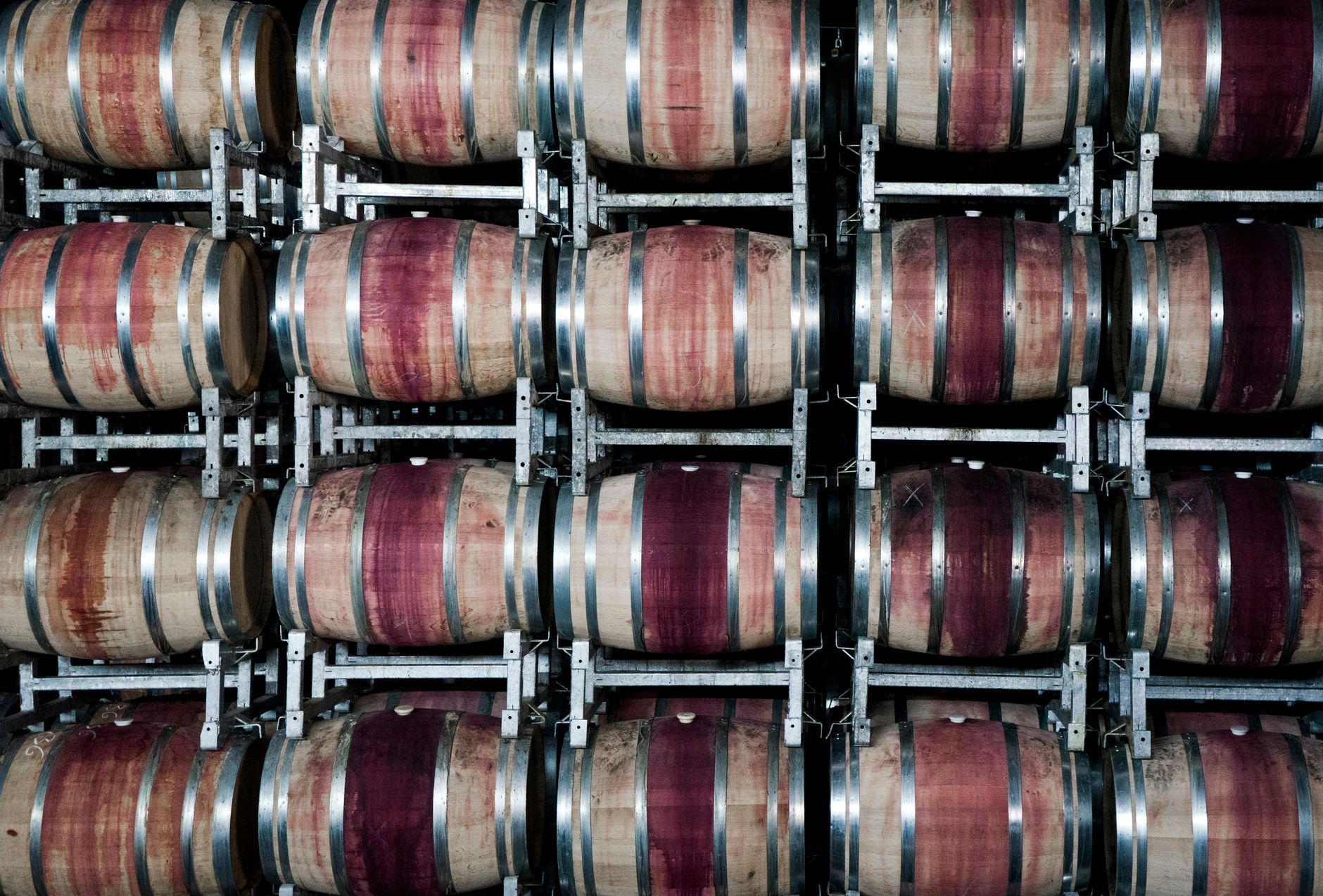
Oak is a vessel and an ingredient
Oak barrels are often discussed as if they simply add flavor, but their role is broader. Oak can act as a fermentation vessel, an aging vessel, a slow oxygen-management tool, and a source of aromas and tannins. A wine can be aged in oak without tasting obviously oaky, especially when the barrels are large, old, or used for a short period.
The most visible oak flavors include vanilla, toast, clove, coconut, smoke, cedar, coffee, caramel, and baking spice. Those notes come from compounds in the wood and from the way the barrel is toasted over heat. But oak also changes mouthfeel. It can round sharp edges, help tannins polymerize, and give a wine more breadth or creaminess.
New oak versus neutral oak
New oak has the strongest flavor impact because the inside surface of the barrel has not yet been depleted by previous wines. A wine aged in a high percentage of new oak may show clear toast, spice, vanilla, or smoke. Whether that is attractive depends on the grape, wine concentration, and balance. Powerful Cabernet Sauvignon may absorb new oak more easily than a delicate white.
Neutral oak has been used enough that it contributes little obvious flavor. It still allows slow oxygen exchange and can still shape texture, but it does not dominate the aroma. Many producers use neutral barrels when they want the benefits of barrel aging without making the wine taste like wood.
French, American, and other oak
French oak is often associated with tighter grain, subtle spice, cedar, and refined texture. American oak is commonly associated with more pronounced vanilla, coconut, dill, and sweet spice. These are tendencies, not absolute rules. Forest source, stave seasoning, cooperage, toast level, barrel size, and wine style all affect the result.
Other oak sources, including Hungarian, Slavonian, and Austrian oak, also matter in certain regions and traditions. Large Slavonian casks, for example, are important in parts of Italy because they can age wine with less obvious wood flavor than small new barrels. The question is not which oak is best; it is which vessel supports the wine.
Barrel size and time
Small barrels expose more wine to wood surface area, so they can have a stronger effect than large casks. A 225-liter barrique is much more influential than a large foudre or botte. Longer time in oak can also increase influence, though newness and barrel size may matter more than time alone.
Winemakers choose oak programs by thinking about fruit concentration, tannin, acidity, intended aging, and regional tradition. Some wines ferment in barrel; others ferment in tank and age in barrel. Some use a mix of new and used barrels. Some never touch oak at all because freshness, fruit purity, or aromatic precision is the goal.
How to recognize oak in the glass
Oak influence often appears as aromas beyond the grape: vanilla on Chardonnay, cedar on Cabernet, clove on Pinot Noir, coconut on Rioja, smoke on Syrah, or toast in sparkling wine aged in barrel components. On the palate, oak can make a wine feel broader, drier, spicier, or more structured.
Oak is successful when it feels integrated. If the wine tastes like fruit, place, and structure with oak as a supporting frame, the barrel has served the wine. If the wine tastes mainly like sawdust, vanilla extract, or char, the wood is leading instead of supporting. The best oak use is not invisible in every case, but it is purposeful.