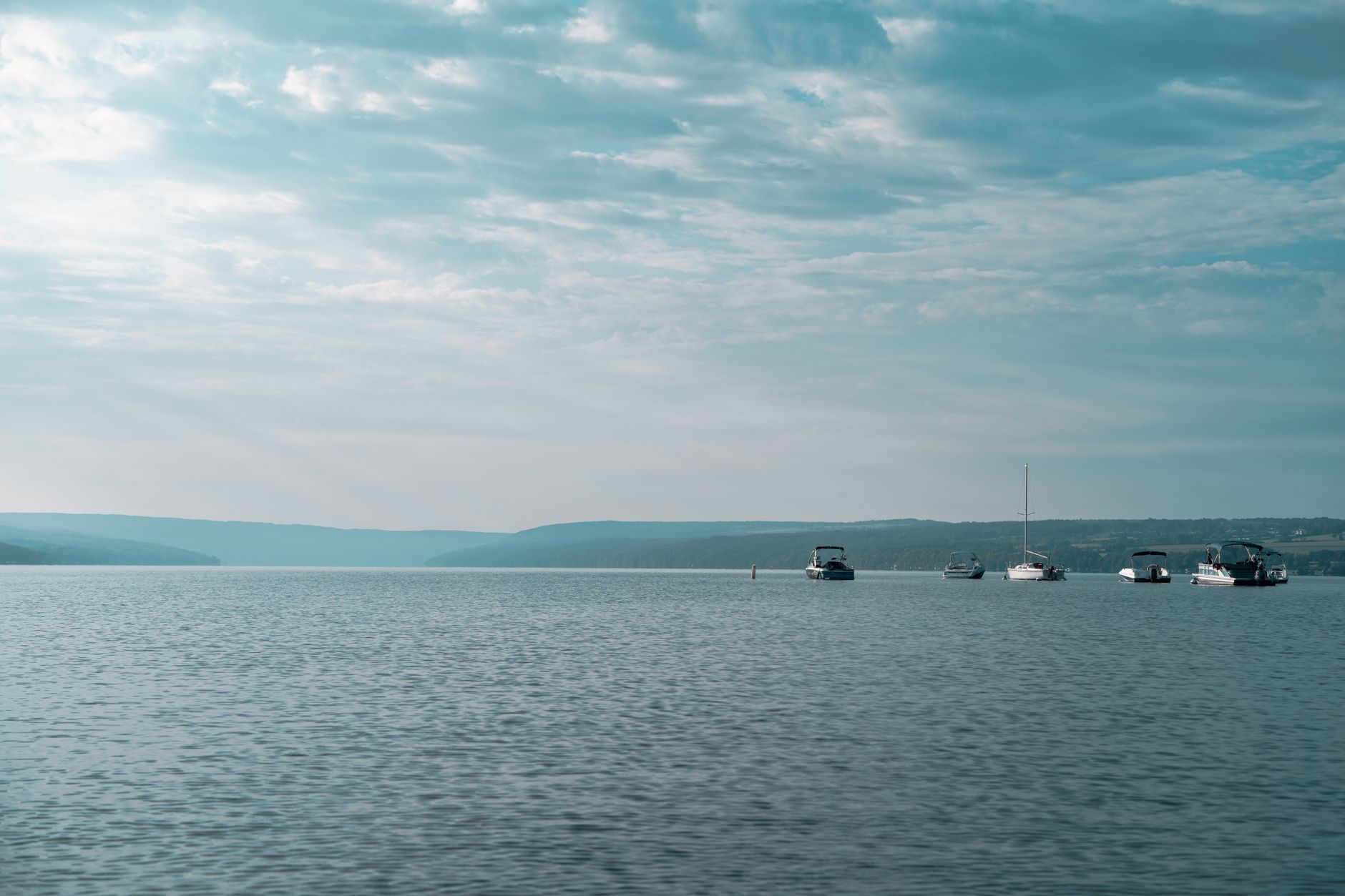
The Finger Lakes are best read through water, slope, acidity, and cold-climate adaptation rather than through a single grape alone.
Why this region matters
The Finger Lakes are a major American cool-climate wine region. Riesling is the natural starting point, but the region also teaches visitors about lake moderation, winter risk, hybrids, vinifera adaptation, and acid-driven wine styles.
For EoW, the region is especially useful because it broadens U.S. wine travel beyond California and Oregon. It shows that climate challenges can be part of a region's identity rather than an obstacle to quality.
How to read the landscape
The long, deep lakes moderate local growing conditions. Vineyards are often arranged around lake slopes, where air drainage, exposure, and proximity to water can affect ripening and winter survival.
Visitors should pay attention to lake names, slope orientation, and whether a wine is labeled from the broader Finger Lakes AVA or from a more specific lake-associated AVA.
Wine styles to understand before you go
Riesling appears in dry, off-dry, and sweet styles, making the region a practical classroom for residual sugar, acidity, and balance. Cabernet Franc, Chardonnay, sparkling wines, and aromatic whites can also be important.
Hybrid grapes and less internationally familiar varieties may appear more often than in warmer, more established regions. These should be treated as part of the regional story, not as curiosities.
Appellations, subregions, and place names
Seneca Lake and Cayuga Lake are key visitor anchors, but the broader region contains many lakes and local site differences.
The most useful EoW connections are to Riesling, acidity, residual sugar, cool climate, hybrid grapes, and AVA terminology.
How visits tend to work
Finger Lakes visits often involve driving around long lake circuits. Geography matters: a short distance on a map can require more time when roads follow lake contours.
Evergreen copy should advise route planning and safe transportation without naming specific operators or relying on changing schedules.
Food, culture, and local context
The region's food and wine context includes lake landscapes, agriculture, cider, local produce, and a mix of long-standing and newer wineries.
Travelers can learn a lot by tasting the same grape across different sweetness levels and asking how acidity is managed in the vineyard and cellar.
Common mistakes to avoid
- Do not imply Finger Lakes wines are only sweet.
- Do not ignore hybrids and cold-climate adaptation.
- Do not underestimate driving distances around lakes.
- Do not describe all lake sites as climatically identical.