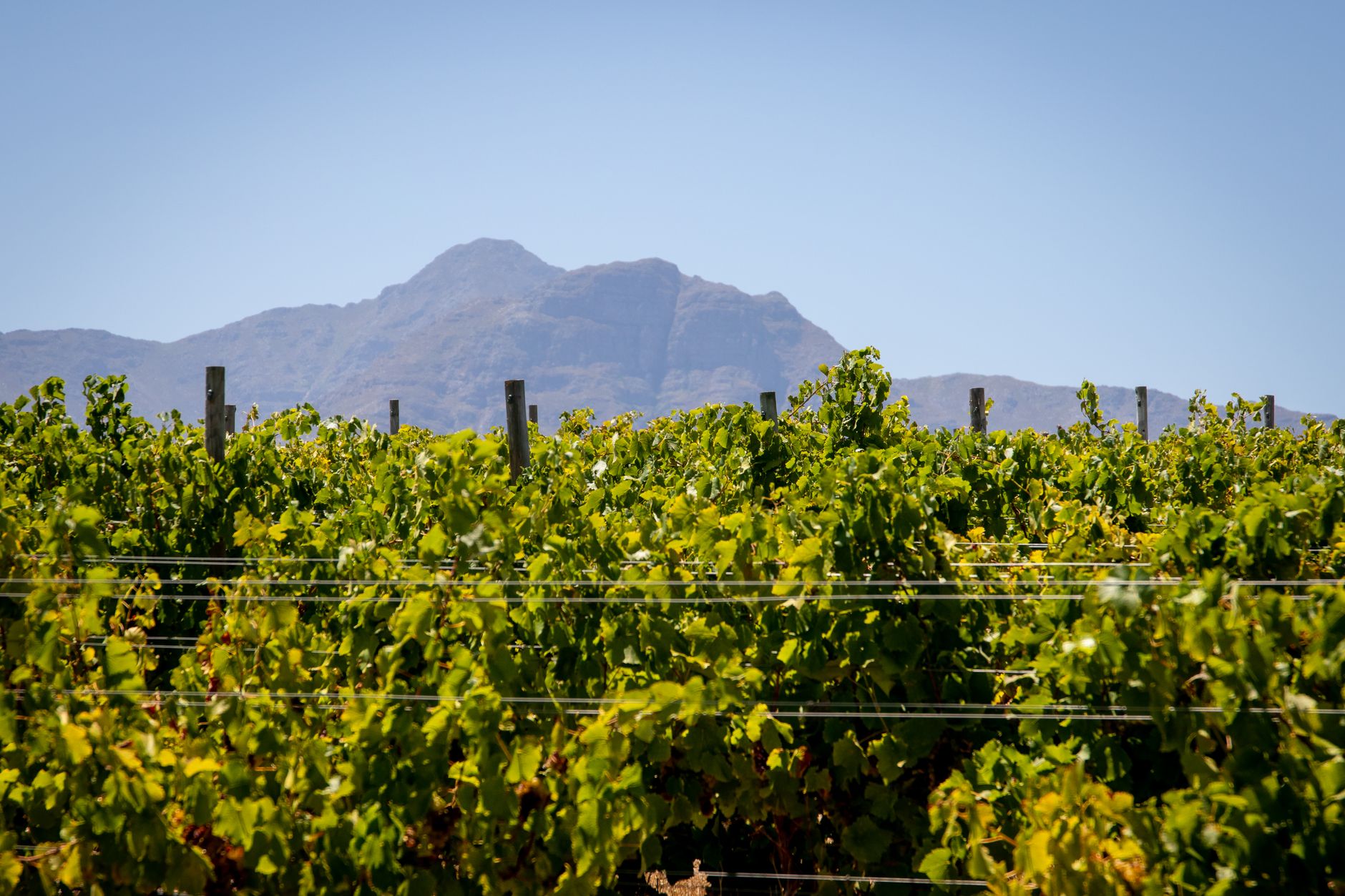
Cape Winelands travel connects mountain scenery, historic towns, Wine of Origin names, Chenin Blanc, Cabernet, Pinotage, and South Africa's layered cultural context.
Why this region matters
The Cape Winelands are one of the most important wine-travel landscapes in the Southern Hemisphere. Stellenbosch is a central anchor, but Franschhoek, Paarl, Constantia, Swartland, and other areas help define the broader story.
For EoW, the region should be treated with care: beautiful landscapes and hospitality are real, but so are deep historical, cultural, and land-use contexts.
How to read the landscape
Mountains, valleys, maritime influence, and varied exposures shape wine styles across the Cape. The geography supports both fresh whites and structured reds.
Visitors should learn the Wine of Origin idea, distinguishing place names such as Stellenbosch, Paarl, Constantia, and Swartland from general South African wine references.
Wine styles to understand before you go
Chenin Blanc is essential to Cape wine literacy, from dry and fresh to textured and ageworthy. Cabernet Sauvignon and blends are important in Stellenbosch, while Pinotage, Syrah, Sauvignon Blanc, Chardonnay, and sparkling wines broaden the picture.
A useful tasting pattern includes Chenin Blanc, a Cabernet-family red, Pinotage or Cinsault, and one wine from a different Cape district.
Appellations, subregions, and place names
Stellenbosch, Franschhoek, Paarl, Constantia, Swartland, Walker Bay, and Robertson can serve as Level 1 orientation names.
EoW should link to Chenin Blanc, Pinotage, Cabernet Sauvignon, Wine of Origin, maritime climate, and old vines.
How visits tend to work
Cape Winelands visits often combine estates, restaurants, art, historic towns, scenic passes, and cultural experiences. Some areas are accessible from Cape Town, but travel planning and safety should still be handled carefully.
The article should avoid listing specific estates or current access details.
Food, culture, and local context
The region's history includes colonial agriculture, labor, land, language, cuisine, and modern transformation. EoW should not flatten this into postcard imagery.
Food context includes Cape Malay influences, braai culture, seafood, farm cooking, and contemporary South African cuisine.
Common mistakes to avoid
- Do not treat Stellenbosch as the entire Cape story.
- Do not ignore Chenin Blanc.
- Do not use Pinotage as a punchline or stereotype.
- Do not present the region without cultural-historical sensitivity.